
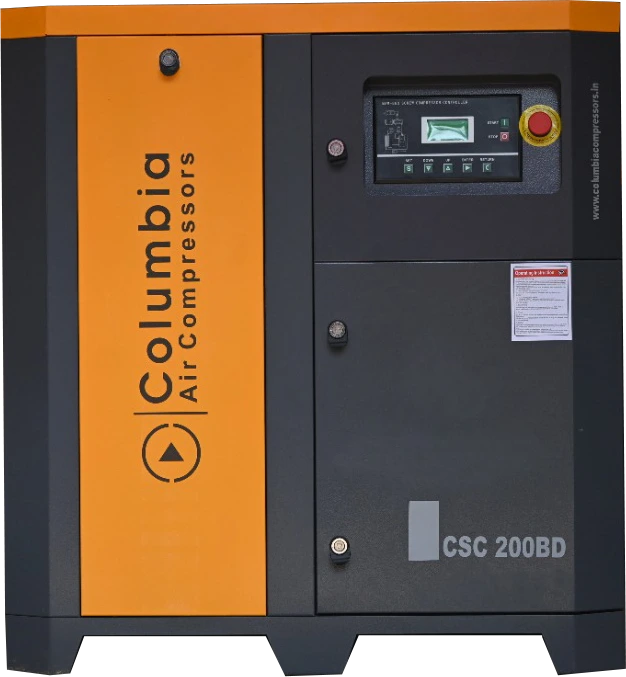
Rotary screw air compressor
Rotary Screw Air Compressor
1.What Is a Rotary Screw Air Compressor?
A rotary screw air compressor is an industrial air compressor that uses two rotating screw rotors to compress air nonstop. It gives smooth, steady air to factories, workshops, and machines that need nonstop airflow without cooling breaks.
2.How Does a Rotary Screw Air Compressor Work?
A rotary screw air compressor works on the principle of positive displacement. It uses continuous rotational movement to trap a fixed volume of air and compress it into a smaller space. As the available space reduces, the air pressure increases and compressed air is produced.
A rotary screw compressor is different from a reciprocating compressor. A reciprocating air compressor uses pistons that move up and down, while a rotary compressor uses spinning parts. In most industrial applications, this machine uses two interlocking helical screws, also called rotors. These rotors move continuously to create a smooth, steady, and pulsation-free flow of compressed air.
The Step-by-Step Air Compression Process
A rotary screw air compressor completes the air compression process in a continuous cycle. This helps the system produce steady industrial compressed air for machines, pneumatic tools, and production equipment.
Air Intake
The process starts when ambient air enters through the compressor intake valve. The air then moves into the compression chamber, where the screw rotors are placed.
Trapping the Air
In electric air compressors, the male rotor and female rotor inside the compression chamber rotate in opposite directions. The male rotor is driven by an electric motor. As both rotors mesh together, air becomes trapped within the cavities between the helical screw threads and is progressively compressed as it moves through the chamber.
Volume Reduction
The trapped air moves along the length of the rotors. As it travels forward, the space around the air gradually becomes smaller. This reduction in volume is the main action of a positive displacement compressor.
Pressurisation
When the air is forced into a smaller space, its pressure increases. This process converts the trapped air into high-pressure compressed air.
Discharge
After compression, the high-pressure air leaves through the discharge outlet. From there, it can move into an air receiver tank, storage tank, compressed air dryer, air filtration system, or downstream equipment.
This continuous process helps rotary screw compressors provide a stable air supply for factories, workshops, CNC machines, packaging lines, textile plants, automotive workshops, pneumatic tools, and industrial compressed air systems.
Two Main Technology Variants
Rotary screw air compressors are mainly available in two technology forms: oil-lubricated and oil-free.
Oil-Lubricated or Oil-Flooded
An oil-lubricated rotary screw compressor injects oil into the compression chamber. The oil seals small gaps between the rotors, reduces noise, absorbs heat, and protects internal parts. After compression, a compressor oil separator removes the oil before the compressed air leaves the system.
This type is also known as an oil-injected screw compressor or oil-flooded screw compressor.
Oil-Free or Dry
An oil-free rotary screw compressor does not use oil inside the compression chamber. The rotors do not touch each other. Timing gears keep the rotors moving with accurate spacing.
This clean air screw compressor is suitable for sensitive industries such as food processing, pharmaceuticals, electronics, and medical equipment, where clean compressed air is required.
Alternative Types of Rotary Compressors
Rotary compressors can also use other designs depending on the application.
Rotary Vane
A rotary vane compressor has one rotor placed off-center inside a cylindrical housing. Sliding blades, called vanes, move in and out as the rotor spins. These vanes create shrinking air pockets that increase air pressure.
Scroll
A scroll compressor uses one fixed spiral and one orbiting spiral. The moving spiral pushes air toward the center while reducing the air space. This creates smooth and quiet compressed air for smaller systems.
Overall, rotary compressors use rotating parts to trap air, reduce its volume, and increase its pressure. The rotary screw air compressor is the most common industrial type because it runs continuously, delivers steady compressed air, improves compressor efficiency, and supports reliable factory air compressor systems.
After understanding the working process, it becomes easier to compare the main types based on lubrication, drive system, and motor technology.
3.Types of Rotary Screw Air Compressors
Rotary screw air compressors are machines that use two rotating screw rotors to compress air nonstop. They are used in industrial compressed air systems because they give a smooth, steady, and continuous air supply.
The main types of rotary screw air compressors are based on lubrication, drive system, and motor technology. Common types include oil-injected rotary screw air compressors, oil-free rotary screw compressors, belt-driven screw compressors, direct drive screw compressors, fixed speed screw compressors, and variable speed air compressors.
1. By Lubrication and Cooling
Oil-Injected Rotary Screw Air Compressors
An oil-injected rotary screw air compressor, also called an oil-flooded screw compressor or lubricated screw compressor, injects oil directly into the compression chamber.
The oil performs three main jobs. It cools the compressor, lubricates the moving parts, and seals the small gaps between the screw rotors. This helps improve compressor efficiency and supports stable compressed air generation.
Oil-injected compressors are widely used in general manufacturing, workshops, textile plants, automotive units, and other factory air compressor systems. They are common because they are reliable, cost-effective, and suitable for heavy-duty industrial use.
However, they need regular maintenance, such as oil changes, oil filter replacement, and compressor oil separator checks. There is also a small risk of oil vapor or oil carryover in the compressed air, so proper air filtration systems and compressed air dryers are often used.
Oil-Free Rotary Screw Air Compressors
An oil-free rotary screw compressor does not use oil inside the compression chamber. The rotors do not touch each other. Instead, timing gears and special coatings keep the rotors moving with accurate spacing.
This type of clean air screw compressor is used when air purity is very important. It is common in pharmaceuticals, food processing, electronics manufacturing, medical equipment, and other sensitive industries.
Oil-free compressors help reduce the risk of oil contamination in the compressed air system. They are often selected when companies need cleaner air quality and must follow strict production or ISO air quality standards.
2. By Drive Configuration
Belt-Driven Screw Compressors
A belt-driven screw compressor uses a belt to transfer power from the motor to the screw compressor air end. These compressors usually cost less at the beginning and are easy to service.
They are suitable for small factories, workshops, and businesses that need a basic industrial air compressor system. However, the belt can wear out over time. Belt friction can also reduce energy efficiency, so these compressors may use more power in long-term operation.
Direct Drive Screw Compressors
A direct drive screw compressor connects the motor directly to the screw air end through a coupling. This design reduces power loss because there is no belt between the motor and the compressor element.
Direct-driven compressors are usually quieter, more efficient, and need less maintenance than belt-driven models. They are a good option for businesses that want a reliable and energy efficient compressor for daily industrial use.
Gear-Driven Screw Compressors
A gear-driven rotary screw compressor uses a gearbox to control rotor speed. This helps the compressor run at an efficient speed for the required air output.
Gear-driven models often cost more at the start, but they can offer strong reliability, smooth performance, and quiet operation. They are commonly used in demanding industrial applications where a heavy duty screw compressor is required.
3. By Motor Technology
Fixed Speed Screw Compressors
A fixed speed screw compressor runs at one constant motor speed. It keeps loading and unloading based on air demand.
This type is simple, durable, and budget-friendly. It works well when air demand stays stable throughout the day. However, if air demand goes up and down, a fixed speed compressor can waste energy because the motor continues running at the same speed.
Variable Speed Drive Screw Compressors
A variable speed air compressor, also called a VSD screw compressor, VFD screw compressor, or VFD rotary screw air compressor, changes motor speed based on real-time air demand.
When the factory needs more air, the motor speeds up. When air demand is low, the motor slows down. This helps reduce wasted energy and improves air pressure control.
A variable speed compressor is useful for factories where air demand changes during the day. It can help reduce power consumption and improve overall compressor efficiency.
Dual-Speed Screw Compressors
A dual-speed screw compressor works at two different motor speeds. It gives better energy efficiency than a fixed speed compressor but usually costs less than a full VSD system.
This type is a good middle option for businesses that want improved energy savings without the higher investment of a full variable speed system.
These design differences matter because they affect performance, energy use, easy maintenance, and air quality.
4.Benefits of Rotary Screw Air Compressors
Rotary screw air compressors are ideal for heavy-duty and continuous industrial operations. A rotary screw compressor uses two meshing helical screws, also called rotors, to compress air in a smooth and steady way. This design helps a rotary screw compressor deliver high-volume continuous air supply for commercial facilities, manufacturing plants, workshops, and production lines.
A screw air compressor is built for long working hours and can support an industrial compressed air system without frequent stops, overheating, or pressure drops. This makes it useful for reliable compressed air generation, stable air pressure control, and strong compressor efficiency.
The main advantages of a rotary screw air compressor include continuous airflow, energy efficiency, low maintenance, long lifespan, quieter performance, and high-quality air output. A VSD screw compressor, VFD screw compressor, variable speed air compressor, or VFD rotary screw air compressor adjusts motor speed based on real-time air demand to reduce energy waste.
A screw compressor machine has fewer moving parts than a piston air compressor, so maintenance is usually lower. With proper servicing, an industrial rotary screw air compressor can last 15 to 20 years or more and support pneumatic tools, CNC machines, packaging equipment, automotive workshops, and textile plants.
Because rotary screw compressors provide continuous airflow and stable pressure, they are used in industries where air supply cannot stop.
5.Common Applications of Rotary Screw Air Compressors
Rotary screw air compressors are ideal for industrial operations that need a continuous and high-demand supply of compressed air. A rotary screw compressor uses two meshing helical screws to compress air smoothly, making it useful for heavy-duty work, factory air compressor systems, and long operating hours.
These compressors are widely used in industrial compressed air systems because they provide steady airflow, strong compressor efficiency, and reliable pneumatic equipment support. They power heavy-duty pneumatic tools, automated production lines, material handling systems, and critical facility equipment.
An oil-lubricated rotary screw air compressor, also called an oil injected screw compressor or oil flooded screw compressor, is commonly used in general manufacturing and workshop applications. An oil-free rotary screw compressor or clean air screw compressor is used where air quality is very important, such as food processing, pharmaceuticals, electronics, healthcare, and cleanroom environments.
In manufacturing plants, an industrial rotary screw compressor supports automated machinery, robotic assembly arms, conveyor belts, pneumatic cylinders, grinders, sanders, fastener tools, cutting tools, and assembly tools. These applications need stable air pressure control, which makes a screw air compressor a strong choice for continuous industrial use.
In automotive workshops and fabrication units, a rotary screw air compressor for pneumatic tools supports assembly, repair, painting, finishing, pneumatic wrenches, tire inflators, lifts, and spray paint booths. A low noise rotary screw air compressor for workshop use, combined with an air receiver tank, compressed air dryer, and air filtration system, delivers cleaner air.
Rotary screw compressors also support construction, healthcare, and agriculture through portable rotary screw air compressor, mobile screw compressor, diesel screw air compressor, oil-free air compressor for industry, factory screw compressor, and portable air compressor applications.
To understand whether a rotary screw compressor is the right choice, it helps to compare it with a piston compressor.
6.Rotary Screw Air Compressor vs Piston Compressor
A rotary screw air compressor and a piston compressor both create compressed air, but they are made for different types of work. A piston compressor is better for small workshops, garages, DIY use, light workshops, and occasional pneumatic tools. A rotary screw air compressor is better for industrial operations that need a steady, quiet, and continuous air supply.
A piston compressor, also called a reciprocating compressor, uses pistons driven by a crankshaft to push air into a cylinder. It works in short cycles and needs rest time to prevent overheating. A rotary screw compressor uses two intermeshing helical screws to trap air and compress it continuously. This makes it useful for factories, auto shops, CNC machines, packaging lines, production lines, and other industrial compressed air systems.
A rotary screw compressor provides smooth, steady, and pulsation-free compressed air. It works more quietly with lower vibration, needs lower maintenance, and is more energy efficient for continuous industrial use. A rotary screw air compressor is commonly used as a factory air compressor or manufacturing plant compressor because it supports reliable compressed air generation, better air pressure control, and long working hours.
A screw air compressor also works well with an air receiver tank, compressed air dryer, and air filtration system. This helps improve air quality for pneumatic tools, paint booths, packaging machines, and sensitive equipment.
The main drawback is the higher initial cost. A piston compressor is cheaper upfront and easy to repair, but it runs hotter, creates more vibration, and can consume more energy during continuous use.
Choose a rotary screw air compressor for heavy-duty industrial applications, automotive workshops, and continuous production. For changing air demand, a variable speed air compressor, VSD screw compressor, or VFD rotary screw compressor can reduce wasted energy.
Once you know that a rotary screw compressor fits your operation, the next step is choosing the correct model for your air demand.
7.How to Choose the Right Rotary Screw Air Compressor
Choosing the right rotary screw air system depends on your air demand, pressure needs, air quality needs, and work area. A good screw air compressor should match your workload, support your compressed air system, and give steady performance without wasting energy.
First, check your CFM and PSI needs. CFM, or Cubic Feet per Minute, shows how much compressed air your pneumatic tools, machines, and equipment need at the same time. Choose a rotary screw compressor with 20% to 30% more CFM than your peak demand to avoid pressure drops. PSI, or Pounds per Square Inch, shows the air pressure your equipment needs. Most industrial applications need around 100 to 125 PSI, but some may need a high pressure air compressor.
Next, choose between an oil injected screw compressor and an oil free screw compressor. An oil injected rotary screw air compressor, also called an oil flooded screw compressor or lubricated screw compressor, is common in manufacturing, metalworking, textile plants, and automotive workshops. An oil free rotary screw compressor or oil free air compressor for industry is better for food processing, pharmaceuticals, electronics, medical equipment, and packaging where clean compressed air is needed.
Then choose fixed speed or variable speed technology. A fixed speed screw compressor works well when air demand is steady. A VSD screw compressor, VFD screw compressor, variable speed air compressor, or VFD rotary screw compressor changes motor speed to improve compressor efficiency and support an energy saving compressor system.
Also compare the drive system. A belt driven screw compressor costs less, while a direct drive screw compressor gives better efficiency. Finally, check ventilation, floor space, air receiver tank, compressed air dryer, air filtration system, industrial piping system, pressure switch compressor, oil filter for screw compressor, compressor cooling system, and compressor control panel.
After installation, proper maintenance keeps the compressor safe, reliable, and efficient for long-term use.
8.Maintenance Tips for Rotary Screw Air Compressors
Proper rotary screw air compressor maintenance is important for long machine life, safe operation, and lower downtime. A well-maintained rotary screw air compressor gives steady compressed air, better compressor efficiency, and reliable performance for industrial use.
A screw air compressor works for long hours, so filters, oil, cooling parts, and air system components must be checked on schedule. In most systems, the oil and oil filter should be changed every 2,000 to 8,000 hours, air filters should be replaced around every 2,000 hours, and the compressor oil separator should be replaced around every 4,000 hours. Always follow the manufacturer’s service manual for the exact schedule.
Daily Maintenance Checklist
Check Oil Levels:
Check the oil level before starting the compressor. The oil should be at the correct level in the sight glass. If the level is low, top it up with the OEM-recommended air compressor lubricant. This is especially important for an oil injected screw compressor, oil flooded screw compressor, or lubricated screw compressor.
Drain Moisture:
Drain water from moisture traps, the air receiver tank, and other drain points. Moisture in the compressed air system can damage pneumatic tools, valves, pipes, and downstream equipment.
Monitor Temperature and Pressure:
Check the compressor control panel, operating temperature, and pressure readings. The system should stay within safe working limits. Unusual readings may point to a screw compressor low pressure problem, overheating, blocked filters, or poor airflow.
Visual Inspection:
Listen for abnormal noise or vibration. Check hoses, seals, fittings, and the industrial piping system for visible air leaks or oil leaks. Early inspection helps prevent common screw compressor problems and expensive downtime.
Weekly and Monthly Inspections
Inspect Air Filters:
Check the intake air filters for dust and clogging. A blocked filter reduces airflow and lowers compressor efficiency. Clean the filter with a vacuum if allowed, or replace it when needed.
Clean the Coolers:
The compressor cooling system must stay clean. Dust-clogged coolers reduce airflow and can cause a screw compressor high temperature issue or rotary screw compressor overheating. Clean cooler fins gently with air or a vacuum.
Check Belts and Couplings:
For a belt driven screw compressor, inspect belt tension, wear, cracks, and alignment. Loose or damaged belts can reduce performance and increase energy use. For a direct drive screw compressor, check the coupling condition as recommended by the manufacturer.
Inspect Electrical Cabinets:
Open the electrical cabinet only when it is safe to do so. Check for dust, moisture, loose wires, or overheating signs. Keep the cabinet closed tightly to protect the compressor control panel and electrical parts.
Annual and Heavy-Duty Maintenance
Complete System Inspection:
A trained technician should inspect the full industrial air compressor system at least once a year. This check may include sensors, safety valves, the pressure switch compressor, motor condition, cooling system, oil circuit, and air end performance.
Oil Sampling:
Oil sampling helps detect internal wear, oil breakdown, dirt, or contamination before major damage happens. It is useful for heavy-duty screw compressors, factory air compressor systems, and machines running for long hours.
Leak Audit:
Air leaks waste energy and increase operating cost. A leak audit helps find hidden losses in pipes, valves, hoses, and fittings. Fixing leaks can improve air pressure control and help reduce compressor energy cost.
Check Air Quality Components:
Inspect the compressed air dryer, air filtration system, drains, and receiver tank. These parts protect pneumatic equipment support systems by reducing moisture, oil carryover, and dirt in the air supply.
Even a reliable rotary screw compressor can develop problems if filters, oil, cooling, or pressure settings are ignored.
9.Common Problems in Rotary Screw Air Compressors
Rotary screw air compressors are reliable machines, but they can still face problems when filters, oil, cooling parts, or air system components are not maintained properly. The most common screw compressor problems include overheating, oil carryover, low air pressure, motor overload trips, and unusual noise or vibration.
Fixing these issues early helps protect the compressed air system, reduce downtime, improve compressor efficiency, and extend the life of the rotary screw compressor.
1. Rotary Screw Compressor Overheating
Rotary screw compressor overheating is one of the most common reasons for sudden shutdowns. Excessive heat can damage the compressor oil, reduce machine life, and affect continuous air supply.
Common causes include:
- Blocked or dirty compressor coolers
- Low oil level
- Poor room ventilation
- Faulty thermal control valve
- Clogged oil filter for screw compressor
- Dirty air intake filter
Solutions:
Clean the compressor coolers regularly to maintain proper airflow. Check the oil level and top it up with the correct air compressor lubricant if needed. Also, inspect the compressor cooling system and make sure the compressor room has proper ventilation. If the temperature keeps rising, a technician should check the thermal valve and internal parts.
2. Screw Compressor Oil Carryover Problem
A screw compressor oil carryover problem happens when too much oil enters the compressed air line. This can damage pneumatic tools, affect product quality, and create problems in downstream equipment.
This issue is more common in an oil injected screw compressor, oil flooded screw compressor, or lubricated screw compressor, where oil is used for cooling, sealing, and lubrication.
Common causes include:
- Saturated or damaged compressor oil separator
- Torn separator element
- Excessively high oil level
- Wrong air compressor lubricant
- Blocked return line
- Poor air filtration system
Solutions:
Inspect the compressor oil separator and replace it if it is damaged or saturated. Make sure the oil level is correct and not overfilled. Use only the recommended lubricant for the rotary screw air compressor. Also, check the oil return line and air filtration system to reduce oil contamination in the compressed air system.
3. Screw Compressor Low Pressure Problem
A screw compressor low pressure problem occurs when the system cannot reach the required pressure. This can affect machines, production lines, pneumatic tools, and other equipment that depend on stable air pressure control.
Common causes include:
- Air leaks in hoses, pipes, or fittings
- Clogged air filters
- Faulty compressor intake valve
- Malfunctioning solenoid valve
- Incorrect pressure setting
- Undersized compressor for air demand
Solutions:
Check the full industrial piping system for air leaks. Inspect hoses, hose reels, joints, valves, and fittings for signs of leakage or wear. Replace clogged intake filters and check the compressor intake valve. Also, review the CFM and PSI demand of your facility to make sure the industrial rotary screw air compressor is correctly sized for your compressed air needs.
4. Motor Overload or Unit Tripping
A rotary screw compressor may shut down automatically when the system detects unsafe operating conditions. This safety trip protects the motor, air end, and electrical parts from damage.
Common causes include:
- High discharge pressure
- Clogged oil filter
- Electrical fault
- Loose wiring
- High internal temperature
- Overloaded rotary screw compressor motor
- Poor compressor cooling system performance
Solutions:
Check the compressor control panel for warning codes. Inspect wiring, pressure settings, and motor load. Replace a clogged oil filter for screw compressor if needed. Also, clean the coolers and confirm that the compressor is not running above its safe pressure range. If the unit keeps tripping, a qualified technician should inspect the electrical system and motor.
5. Unusual Noise and Vibration
A healthy screw air compressor usually makes a steady humming sound. Grinding, knocking, rattling, or squealing can be a sign of mechanical wear or internal damage.
Common causes include:
- Worn air end bearings
- Rotor damage
- Loose foundation bolts
- Belt wear in a belt driven screw compressor
- Coupling issue in a direct drive screw compressor
- Poor alignment
- Internal air end damage
Solutions:
Stop the machine if the noise is loud or unusual. Check the foundation bolts, belt tension, coupling, and vibration level. Do not continue running the compressor if grinding or knocking sounds are present. The screw compressor air end should be inspected by a trained service professional to prevent major failure.
Along with performance and maintenance, price is another key factor when selecting a rotary screw air compressor.
10.Rotary Screw Air Compressor Price Factors
Rotary screw air compressor price depends on capacity, technology, air quality needs, and included accessories. A higher HP and CFM rating costs more because the compressor needs a larger screw compressor air end, stronger motor, and better cooling system.
Fixed speed screw compressors usually cost less upfront because they run at one constant speed. They work well when air demand is stable. A VSD screw compressor or VFD rotary screw compressor costs more because it adjusts motor speed based on real-time air demand. This can reduce electricity use and improve long-term compressor efficiency.
Lubrication type also affects cost. An oil injected rotary screw air compressor is more affordable and suitable for general manufacturing, workshops, and industrial use. An oil free rotary screw compressor is more expensive because it uses precision engineering to deliver cleaner compressed air for food processing, pharmaceuticals, electronics, and medical applications.
Accessories such as an air receiver tank, refrigerated air dryer, air filtration system, and advanced compressor control panel also increase the price.
Overall, the lowest upfront price is not always the best choice. The right compressor should match your CFM, PSI, air quality needs, and energy-saving goals.
11.Conclusion:
Need a rotary screw air compressor that keeps your production running without pressure drops, high power use, or frequent downtime? The right compressor can improve daily performance, lower running costs, and give long-term support.
If your facility needs steady airflow, stable air pressure, and energy-efficient compressed air, choosing the right model is important. The best compressor should match your air demand, working hours, air quality needs, maintenance plan, and total cost.
At Columbia Air Compressor, we help you choose the right rotary screw air compressor for your work. Whether you need an oil-injected compressor for general industrial use or an oil-free compressor for cleaner air, we can guide you to the right solution.
For expert advice, product selection, installation support, or a custom compressor recommendation, contact Columbia Air Compressor today.
FAQ
What are rotary screw air compressors used for?
Rotary screw air compressors are used to give steady compressed air for industrial and commercial work. They power pneumatic tools, CNC machines, packaging lines, spray painting systems, automotive workshops, manufacturing plants, food processing units, pharmaceutical equipment, and other systems that need nonstop airflow.
What is the working principle of a rotary screw air compressor?
A rotary screw air compressor works on the positive displacement principle. It uses two interlocking helical rotors to trap air, reduce its volume, and increase its pressure. This creates a smooth, continuous, and pulse-free supply of compressed air.
What is the 75% duty cycle?
A 75% duty cycle means the compressor can run for 75% of a given time period and should rest for the remaining 25%. For example, in one hour, it can run for about 45 minutes and should cool down for about 15 minutes.
Which is better, CFM or SCFM?
SCFM is better for comparing portable air compressors because it measures airflow under standard conditions. CFM shows actual air delivery, but it can change with temperature, pressure, and humidity. SCFM gives a more consistent comparison.
How many CFM is equal to 1 HP?
1 HP usually produces around 3 to 5 CFM, depending on compressor design and pressure. For many industrial air compressors, the common estimate is about 4 CFM per HP at around 90 PSI.
How many hours do screw compressors last?
A rotary screw compressor can last around 60,000 to 100,000 operating hours with proper maintenance. Its life depends on service schedule, oil quality, air filtration, cooling, operating temperature, and workload.
Can I use 10W30 in my air compressor?
You should not use 10W30 in an air compressor unless the manufacturer specifically allows it. Many 10W30 oils contain detergents made for car engines, which can cause foaming, carbon buildup, and poor compressor performance. Use the air compressor lubricant recommended in the manual.
What is a Single-Phase Rotary Screw Air Compressor?
A single-phase rotary screw air compressor uses two rotating screw rotors to compress air continuously using 220–240V single-phase power. It is ideal for workshops, garages, CNC machines, and small industries needing quiet, efficient, and reliable compressed air operation.